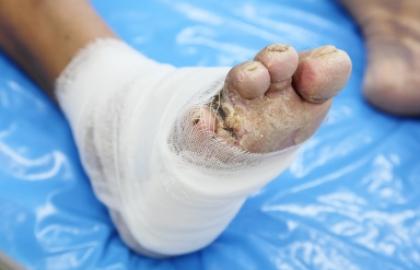
Varicose vein ulcers, medically termed venous stasis ulcers, are among the most stubborn and distressing conditions treated in vascular medicine. These open sores, typically appearing on the inner ankle or lower leg, are not merely skin wounds but the result of a deeper circulatory failure. When the valves in the leg veins weaken, blood flows backward and pools under high pressure, leading to tissue breakdown. For many patients, these ulcers become a nightmare of chronic pain, swelling, and infection that resists standard dressings for months or even years.
Ayurveda offers a powerful, time-tested solution for these non-healing wounds through Jaloukavacharana, or Leech Therapy. Far from being a primitive practice, this therapy is revered in Ayurveda as the supreme method of Raktamokshana (bloodletting) for delicate cases. It addresses the root cause: the stagnation of impure blood (Dushta Rakta) that prevents fresh oxygen from reaching the tissues.
The Mechanism: How Nature’s Microsurgeons Work
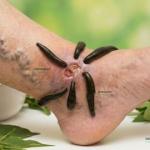
Medicinal leeches (Hirudo medicinalis) are biologically engineered to heal. They do not just remove stagnant blood; they act as a "bio-pharmacy," injecting a complex cocktail of bioactive enzymes into the wound bed. This dual action makes them uniquely effective for varicose ulcers.
Key components of leech saliva include:
Benefits of Leech Therapy for Varicose Ulcers
Unlike surgical stripping or chemical ointments, Leech Therapy offers a holistic approach that manages both the symptoms and the underlying pathology.
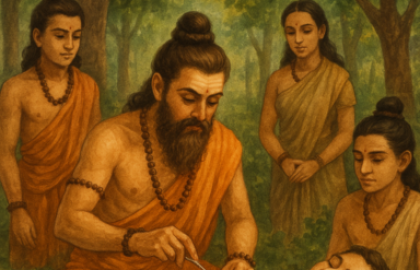
What to Expect During the Procedure
The procedure is conducted under strict hygienic conditions.
Conclusion
For patients suffering from the agony of non-healing leg ulcers, Leech Therapy offers a bridge back to health when conventional methods have failed. It is a testament to the sophistication of Ayurveda—using nature's own mechanisms to restore the flow of life.


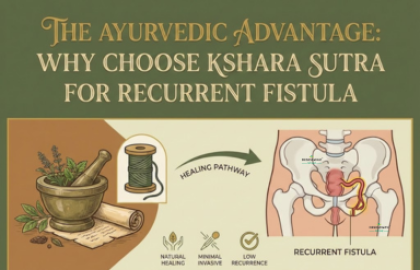
In complex and recurrent cases of anal fistula, Kshar Sutra Therapy offers a solution that is...
Kshar Sutra Treatment is the best treatment for Piles, Fissure, Fistula and Pilonidal Sinus. It is...